

Analytics teams often work in the organizational “boiler room,” building dashboards and validating metrics that leaders rely on in the boardroom. Yet despite this critical role, many organizations struggle to turn data into measurable outcomes. Closing this gap requires more than better reporting. It requires operationalizing analytics so insights consistently drive decisions, customer experience improvements, and measurable financial results.
The Invisible Engine Powering Decisions
Picture a massive ocean liner cutting through open water. Passengers on deck sip cocktails and admire the view while the ship moves steadily forward. Few think about the boiler room below, where engineers monitor pressure gauges, adjust fuel mixtures, and keep the vessel running. If the engines failed, everyone would notice. When they run perfectly, the people doing the work remain invisible.
Analytics teams operate in a similar boiler room. They build dashboards, validate metrics, and ensure leadership can trust the numbers discussed in the boardroom. Yet when a product launch succeeds or a campaign exceeds its targets, the organization often overlooks the analytics team’s contribution and credits the visible teams leading the initiative.
The data reinforces this challenge. Research shows that only 20 percent of analytics insights translate into measurable business outcomes. The issue is rarely flawed analysis. More often, a gap between the report and the revenue disconnects insight from action. When this happens, leadership begins to see analytics as a utility that should simply function in the background. When budgets tighten, utilities are cut while strategic partners are funded.
“To move from cost center to value driver, analytics must speak the CFO’s language. Finance leaders do not invest in ‘better visibility.’ They invest in revenue growth, cost avoidance, and risk mitigation.”
Closing this gap requires a deliberate shift in how analytics teams operate and demonstrate value. Visibility does not happen automatically. It is built by connecting analytics work directly to decisions and outcomes. The following three shifts show how analytics teams can make their impact both measurable and visible.

Start Treating Analytics Like a Product
When a stakeholder asks for a “Q3 performance pull,” many analytics teams respond like a drive-thru. They take the order, package the data, and send it off in an email thread. Two weeks later, the same stakeholder asks for the same report with a slightly different filter.
Reports are temporary. They answer a question once and then disappear into an archive. Products are different. They have lifecycles, returning users, measurable adoption, and clear outcomes. Increasingly, AI-enabled analytics products can identify trends, predict customer behavior, and surface actionable insights. When analytics operates this way, teams move faster and make better decisions that improve the customer experience.
Treat stakeholders as clients rather than ticket submitters. When marketing asks for “monthly campaign performance reporting,” do not just take the order. Take the brief. Ask what decisions change if the time-to-conversion drops 15 percent. Who needs access to the data, and how often? What does success look like? What action follows if a metric moves?
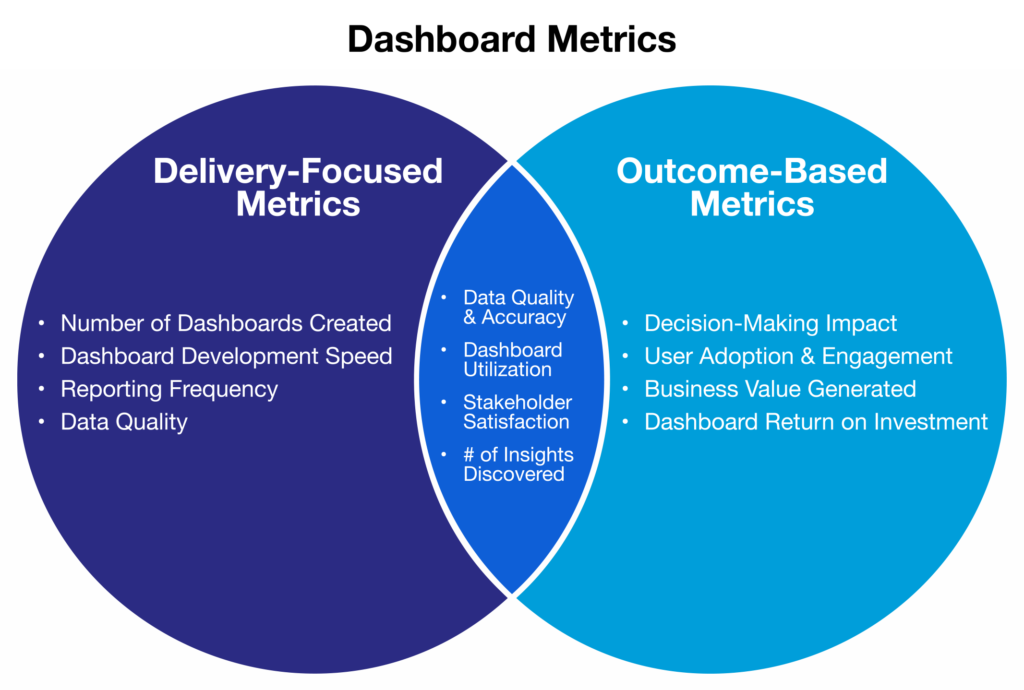
Once the focus shifts from dashboards to products, success metrics must shift as well. Measure outcomes instead of output. Track:
- Time recaptured: How many hours did the product eliminate from manual data pulls?
- Decision velocity: What business decisions or actions did the tool enable?
- Data quality: What is the error rate, and how has it improved over time?
These operational gains free teams to focus on higher-value customer experience initiatives such as proactive outreach, faster onboarding, and more personalized recommendations.
One mid-market private equity firm applied this model to spend analytics. Instead of responding to ad hoc requests, the firm built a unified analytics tool. Monthly reporting time dropped by 60 percent. More importantly, the tool exposed pricing inconsistencies across portfolio companies that manual reporting had missed for years. Correcting those inconsistencies improved margins and strengthened customer trust through more transparent, consistent pricing.
When analytics teams ship products instead of reports, the conversation with leadership changes. The question is no longer “What did you deliver?” It becomes “What did you enable?”

Connect Analytics to Business Value
In the boardroom, clarity alone is not enough. A clear report that does not influence a decision is simply a well-formatted expense.
To move from cost center to value driver, analytics must speak the CFO’s language. Finance leaders do not invest in “better visibility”. They invest in revenue growth, cost avoidance, and risk mitigation. Analytics often feels like invisible infrastructure because teams struggle to track the outcomes their insights create. Leadership measures the ROI of sales tools through deal velocity yet rarely measures the ROI of analytics.
Closing this gap starts before the first row of data is pulled. Define the value intent for every analytics initiative:
- The baseline: What cost or revenue is currently tied to this process?
- The lever: Which specific business lever will this insight influence?
- The follow-up: Three months later, did that lever actually move?
Proving analytics impact does not require complex modeling. It requires clear attribution and consistent documentation. Several simple practices make this possible:
- A/B decision log: Document the path not taken by recording the difference between a stakeholder’s initial plan and the data-informed decision that followed.
- Hold-out groups: Apply an insight to 90 percent of a target audience while keeping 10 percent as a control group to measure the performance gap.
- Time recaptured: Quantify operational return by measuring the manual hours eliminated when analytics replaces recurring data pulls.
These practices make analytics contributions visible. An impact scorecard should then connect analytics insights directly to business and customer experience outcomes. For example, improved customer retention increases recurring revenue. Higher satisfaction reduces churn. Stronger advocacy drives organic growth through referrals. When analytics links customer experience improvements to financial results, its value becomes clear across the organization.
One caution remains. 60 percent of analytics initiatives fail because they lack business alignment. Before building the metric, define the “so what.” If the insight does not change a decision, it will not create impact.

Embed Analysts Where Decisions Happen
Many analytics teams operate like a remote help desk. They are physically and organizationally separated from the teams making business decisions. If your presence shows up only as a data pull request in Slack, you are not seen as a strategic partner. You become an order-taker for the teams leading the work.
Embedding analysts within business teams changes that dynamic. When an analyst sits with the Growth team, they see more than a conversion rate or pipeline velocity metric. They hear the end-of-quarter conversations and understand the pressure behind the numbers. Over time, they learn which metrics truly influence behavior and which ones are simply noise. The analyst shifts from technician to strategic teammate.
Embedded analysts should focus on three practices:
- Attend planning meetings, not just readouts. Understanding the context behind a request prevents wasted effort on metrics that no one will use.
- Define success criteria before building. Ask stakeholders, “If this number moves 10 percent, what decision changes?” If the answer is unclear, the request needs refinement.
- Own the narrative, not just the numbers. Present findings in business terms rather than statistical significance. Whenever possible, connect operational changes to measurable improvements in customer experience, such as higher engagement, increased retention, or stronger customer advocacy.
The opportunity for better alignment is significant. Only 30 percent of business users say they work effectively with data teams, while 74 percent of data professionals believe collaboration is strong. This gap exists because analytics teams measure delivery, while business leaders measure usefulness. Embedding analysts closes that gap by shifting the conversation from “Did you build it?” to “Did it help us win?”
Make Analytics Impact Undeniable
Visibility is not a byproduct of good work. It is a discipline that must be built intentionally. Analytics teams cannot wait for leadership to recognize their value. They must document it, prove it, and communicate it in business terms.
Moving analytics from a utility to a strategic asset requires four deliberate practices:
- Build products, not reports. Create analytics tools with clear lifecycles and measurable adoption, rather than producing one-off spreadsheets.
- Connect insights to financial outcomes. Before starting any analytics project, identify the business value it will influence. This may include revenue growth, cost avoidance, customer engagement, or risk reduction.
- Embed analysts within business teams. Place analysts where decisions are made so they can connect technical insights to operational reality rather than operating in isolation.
- Track impact, not output. Build an impact scorecard that measures decisions enabled, operational improvements, and measurable business outcomes, rather than counting dashboards delivered.
You do not need a full organizational overhaul to begin. Start with a focused pilot. Embed one analyst within a single business unit and track the decisions and outcomes that follow. Over the next quarter, improvements in decision quality and operational efficiency can provide clear evidence for expanding the model.
When analytics teams move out of the boiler room and onto the bridge, their role changes. They are no longer seen as a back-office function responding to requests. They become contributors to growth, efficiency, and customer experience improvements. Their value becomes visible because it is consistently connected to outcomes.
Analytics does not become strategic because the organization says it is. It becomes strategic when its insights consistently shape decisions that matter. The teams that make this shift stop measuring their success in dashboards delivered. They measure it in decisions improved, customer experiences strengthened, and outcomes achieved.
When that happens, analytics is no longer the invisible engine below deck. It becomes part of how the organization navigates.
Are you ready to start speaking your CFO’s language? Let’s connect and discuss strategies to make your analytics impact undeniable.