

Insight alone doesn’t change customer experiences. Real customer experience (CX) impact comes from translating understanding into action through intentional design, relevant personalization, and tools that scale with purpose.
In Part 1 of this series, through the eyes of a Kia recall experience, we explored how to truly understand your customer through personas, journey mapping, better zero-party data, and Voice of the Customer (VoC) programs, and a unified customer perspective. That foundation helps teams see experiences through the customer’s eyes and identify what matters most.
Now it’s time to put that understanding into action. You’ve gathered behavioral signals, collected direct feedback, and built a complete view of who your customers are. The next step is activation—turning those insights into meaningful experiences that deliver measurable business impact.
In this final installment, we’ll show how to activate your Customer Experience (CX) data through human-centered design and scalable personalization. You’ll also learn how to amplify results with smarter use of analytics and MarTech frameworks that help your organization turn insight into action.

Meaning and Context Turn Insights into Action
Understanding your customer is only one part of the equation. The next step is turning that understanding into experiences that truly resonate. That’s where human-centered design and personalization come in. These two approaches make the customer the experience epicenter and allow you to activate customer insights in ways that are not only scalable, but deeply meaningful.
When done right, they bridge the gap between what your customers need and what your business delivers.
Experience Context is the Core of Human-Centered Design
Human-centered design (HCD) keeps customer needs, behaviors, and expectations at the heart of the design process. Rather than designing based on assumptions or internal agendas, HCD starts with empathy, meaning, context, and continuous iteration.
Think of it this way: If your digital experiences aren’t intuitive for your customers, they’re not fully designed, no matter how clean they look.
To apply human-centered design:
- Use data early. Don’t wait until post-launch to validate decisions. Use zero-party and first-party data upfront to guide designs from the beginning.
- Find the story in the data. It’s easy to make assumptions and lean towards personal and professional bias. Don’t be tempted to do that. Let the data tell you the story and tailor your approach based on the narrative.
- Embrace iteration. You don’t need perfection out of the gate. Launch strong MVPs, collect feedback, and refine based on real performance data.
As you start to understand the human aspects of design that create meaning, the next step is activating experiences that feel relevant to each individual.
Making Experiences Personal Creates Impact
Personalization isn’t new, but many organizations still struggle to execute it well. Privacy concerns, data fragmentation, and unclear use cases often hold teams back. But when done right, personalization delivers some of the highest ROI in customer experience.
Case in point: BlastX Consulting helped a client personalize content using Voice of Customer survey data. When users selected interests like freshwater fishing, we dynamically served related content, including a key license conversion page.
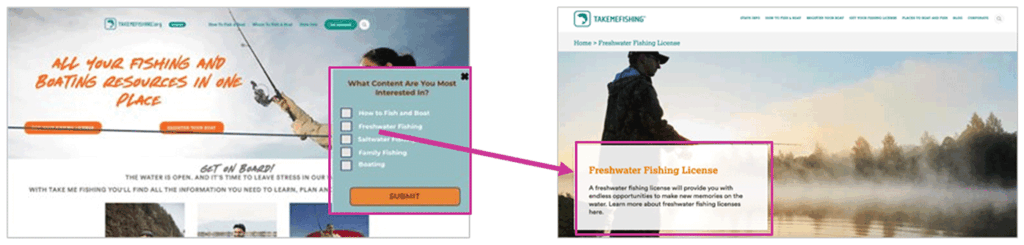
Results:
- 301% increase in blog content clicks
- Greater than 200% increase in core conversion metric
Personalization that performs starts with:
- Balancing privacy with progress. Be transparent and prioritize zero-party and first-party data.
- Starting with use cases. Don’t personalize for the sake of it. Focus on high-impact journeys like re-engagement, conversion recovery, or product recommendations.
- Scaling with technology. Use AI and automation tools to scale effectively while maintaining oversight and relevance.
With design and personalization working together, you’ve built the foundation for meaningful customer experiences. Now it’s time to accelerate that impact with the tools already in your stack.
Making Better Use of Your MarTech Investments
Once your personalization and design efforts are in motion, it’s time to accelerate impact using your analytics and MarTech stack. Many companies underutilize the tools they already have, leaving valuable insights and activation opportunities on the table.
Dive Deeper into Your CX with Analytics Tools
Today’s analytics platforms are more than reporting dashboards. They’re strategic tools for real-time customer experience optimization. When used intentionally, they enable deeper understanding, faster action, and more adaptive customer experiences.
Make the most of your analytics tools:
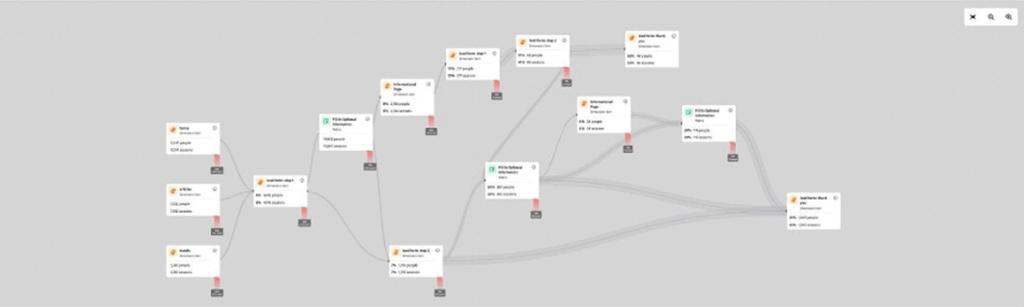
- Unify insights with customer journey analytics. Platforms like Adobe Customer Journey Analytics (CJA) can integrate multiple data sources, including offline data,
- Apply advanced features. Use AI-powered capabilities like anomaly detection and real-time alerts to respond quickly to engagement drops or behavioral shifts.
Pro tip: Regularly audit your analytics usage to ensure you’re taking advantage of the most impactful features within your tools.
Optimize Your MarTech Stack Investments for Impact
Your MarTech stack shouldn’t just collect data; it should activate it. The key to real-time personalization and agile CX execution lies in how well your tools are connected, streamlined, and used.
Optimize your stack by:
- Focusing on what works. Apply the 80/20 rule: Identify the ~20 percent of tools delivering the most value and streamline the rest.
- Driving activation through integration. Use your stack to run A/B tests, automate personalized content delivery, or orchestrate cross-channel journeys. For example, Adobe Journey Optimizer + Adobe CJA audiences = real-time personalization at scale.
Pro Tip: Before investing in new tools, explore underutilized capabilities in your current ecosystem.

Activate Your CX for Impact
You’ve built a strong foundation for understanding your customers. Now it’s time to ensure you’re activating that knowledge effectively. Use this checklist to confirm your customer experience strategy is moving from insight to measurable impact:
- Implement Human-Centered Design
- Engage in Scalable, Relevant Personalization
- Unlock Advanced Insights Through Analytics Platforms
- Streamline and Activate Your MarTech Stack
It seems like a simple list. It’s not.
These aren’t one-time initiatives. They’re ongoing practices that evolve as your customers’ needs and behaviors change. When you commit to continuous activation and optimization, you create experiences that don’t just meet expectations; they build loyalty and drive growth. The business impact is significant.
Making the Leap from Insight to Impact
Creating truly customer-centric experiences isn’t just about knowing your audience; it’s about executing with empathy, precision, and adaptability.
In Part 1, we explored how to:
- Build personas and customer journey maps
- Collect meaningful zero-party data and listen continuously through Voice of Customer efforts
- Focus on a unified customer perspective
In this edition, we showed you how to:
- Apply human-centered design to prioritize customer needs
- Activate personalization strategies grounded in real behavior
- Maximize results using analytics platforms and a focused MarTech stack
When these elements come together (insightful research, thoughtful design, smart activation, and continuous optimization), your CX strategy evolves from static plans into a dynamic system that builds trust, loyalty, and business growth.
What’s the Experience Customers Have With Your Brand?
Clients we support have an idea, but they need a guide to help them make the leap from insight to impact. The team at BlastX Consulting is purpose-built for helping create exceptional experiences that inspire and impact that lasts.
If that’s on your agenda, let’s talk.